Every Day at 3:07 His Brain Filled With Wet Cement. Coffee Did Nothing. The Pills Did Nothing. Then He Stopped Taking Them Like a Multivitamin.
He wasn’t lazy. He wasn’t “just getting older.” A two-year trail of bottles and 3 PM blackouts led to one ugly discovery: the pills were landing in a body that wasn’t open.

A closer look at why a molecule sold on every drugstore shelf in the country can be taken apart before it arrives — and the route that avoids it.
At 3:07 the lights behind his eyes dimmed.
Not tired. Not “need a snack.” The heavy, wet-cement version of himself.
The one who reread the same email four times and still couldn’t answer it.
Coffee sat in the mug like a prop.
The liver pills in the kitchen cabinet had been there long enough to feel like a personality trait.
He had done the responsible thing. Bought the bottle. Took it most mornings. Waited.
Nothing moved.
The crash wasn’t a mystery and it wasn’t a moral failure.
The compound was never getting a door into the system. He was dry-swallowing it like a Flintstone vitamin and calling that a protocol.
The $200 Drawer, and the Afternoon That Kept Going Flat
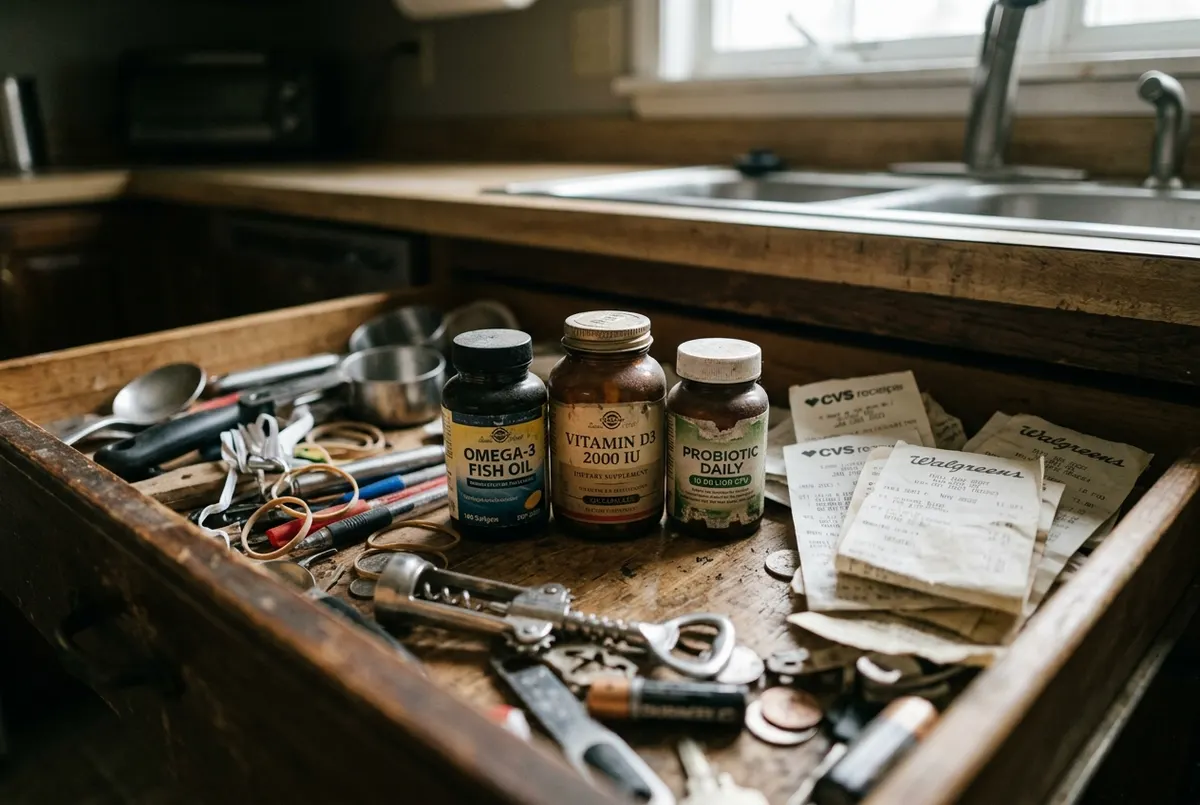
The drugstore bottle first. Cheap, honest, nothing wrong with it on paper. He finished it. Nothing.
Then his friend's — costlier, glossier label, the kind a man buys because the last one was too cheap to count. Nothing.
Then the program he found online, because by then he figured he hadn't gone big enough. A little over two hundred dollars, across roughly two years.
Three bottles. One conclusion: it's me.
That's the quiet part. He didn't rage about the money. He filed it under age, the way a man files gray hair and stiff knees, and stopped expecting three o'clock to be any different.
Except the molecule is old.
The molecule most of these formulas are built around has been in the scientific literature since 1921, isolated by Frederick Gowland Hopkins at Cambridge, who later won a Nobel Prize for separate work on vitamins.
A hundred years of paper trail. On every drugstore shelf in the country. And a reasonable man who had bought it three times and felt nothing. That is not a shrug. That is a question.
It Wasn't His Age. It Was the Door.
The molecule is called glutathione. And here is the part almost nobody selling it mentions.
Glutathione is built like a small protein. A tripeptide — three building blocks in a chain, the same kind of chain the body builds protein from.
And the entire job of a stomach, when protein arrives, is to take protein apart. That is what stomach acid is for. It cannot tell a supplement from a steak.
So a swallowed capsule of glutathione is largely broken down before it is ever absorbed. Right molecule. Wrong door.
Not his age. Not his body. Not a bad ingredient.
The route.
What I Checked Before I Believed Any of It

My job is mild skepticism. I cover aging and energy and the parade of drops and powders that promise to fix them. I expected to explain why his bottles hadn't worked, and move on.
Instead I found the opposite. The ingredient was real. The science was old. The failure was structural. So I stopped looking at dose and started looking at delivery.
A drugstore capsule. A friend's premium bottle. A fourteen-day program. Different prices. Same door. Same acid.
The Route That Never Goes Near the Acid

The stomach is the wrong door. There is another one.
The tissue under the tongue is thin, and the blood vessels sit close to the surface.
Held there, a liquid passes into the bloodstream without going down into the acid first. It skips the step that takes it apart. A delivery difference, not a potency contest.
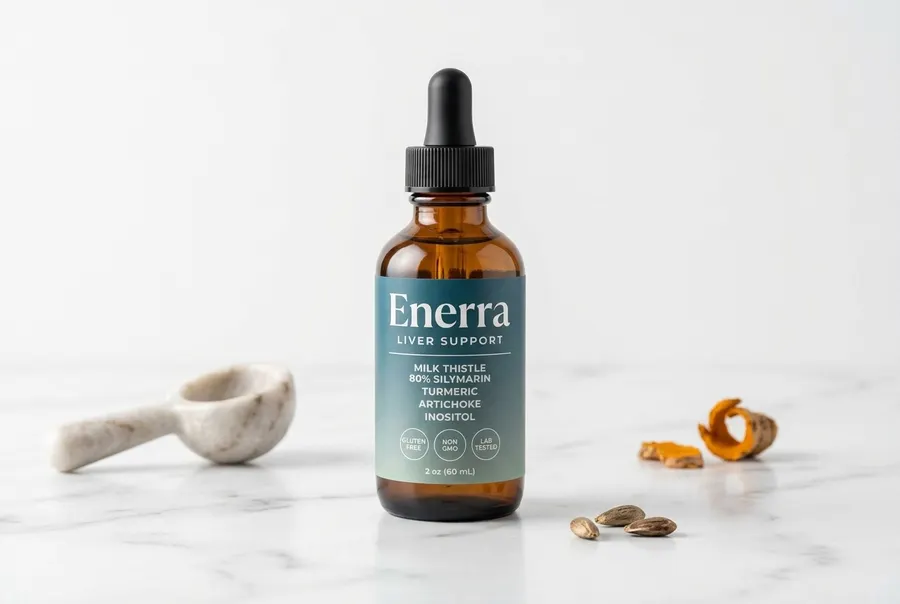
That is the route the formula he settled on uses: a sublingual liquid, held under the tongue about thirty seconds. Alcohol-free, no fillers.
It also carries NAC — the raw material the body uses to make more of its own glutathione.
Around those sit the liver-support classics: milk thistle, dandelion and artichoke, traditionally associated with normal bile flow, with choline and beet alongside.
The product is called Enerra Complete Liver Support Drops. The name is not why it interested me. The door is.
What Was Really Stopping Him
I asked what had held him back.
The drawer, and the small embarrassment of it.
The story he had told himself — that this was age, and that hoping again was a little foolish.
And the flat assumption that a fourth bottle would end like the first three.
All three rested on one premise: that the ingredient had been given a fair run. It had not. Three times it went into the acid first.
Which left a narrower question. Not whether the ingredient works. What it does when it arrives intact.
By his account the commitment is about thirty seconds under the tongue. Nothing to swallow. Nothing else in his day had to change.
Ninety Days to Judge It on His Own Afternoons
A 90-day money-back guarantee. Three months to hold it under his own tongue, live his own afternoons, and decide.
That was not a marketing line to him. It was the reason he tried at all. If it did nothing, he'd send it back and be out the postage. There was no third outcome.
What It Cost Him to Find Out

A single IV session of this molecule at a clinic runs $150 to $250. One visit, one afternoon of his time.
The drops he landed on are just a fraction of the price.
Set that against the two hundred dollars already sitting dead in his drawer — money spent sending the right molecule the wrong way in, three times.
This time the difference isn't the ingredient and isn't the price. It's the route — the same glutathione his old bottles carried, arriving under the tongue instead of down into the acid.
So he said yes. Not with excitement, he told me. With something closer to plain curiosity — the wish to know, finally, whether the flat afternoons were really just his age.
A Note, Added After the Interview
UPDATE: He wrote back some time later. What he noticed, he said, was not a feeling so much as an absence. He got to the end of a Thursday and realized he had not thought about three o'clock once.
He mentioned it in passing, which is the only way I have found that kind of report believable. He asked me not to make it sound like a miracle. By his account, the afternoons belong to him again.
· 53,000+ customers